Quick answer
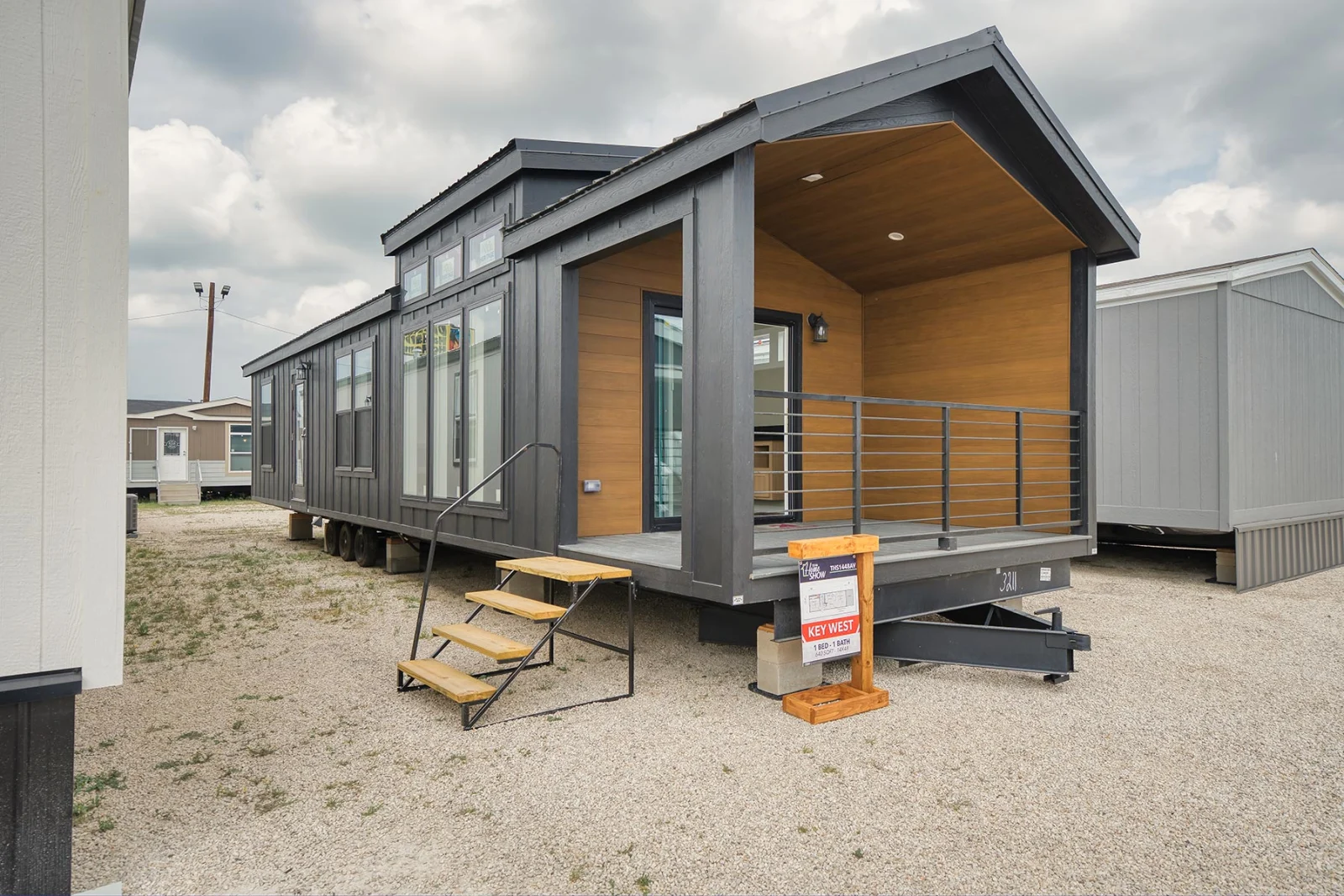
Arizona is one of the most off-grid-friendly states for tiny home placement in 2026, with permissive rural zoning in Cochise, Yavapai, Mohave, and Apache counties. The trade-off is extreme summer heat (130+ degrees), water scarcity, and remote site logistics. Spec your unit for heat (R-30 walls minimum, dual heat pump, sun-rated roof). Delivery from Texas: $2,800-$4,200.
Why Arizona attracts tiny-home buyers
Three reasons: cheap rural land (some Cochise County parcels sell at $1,500-$5,000 per acre), permissive county zoning that accepts off-grid placement, and a year-round dry climate that’s easier on building envelope than the humid southeast. The trade-offs — extreme heat, water access, and remote logistics — are real and need to be designed around.
Best Arizona counties for tiny home placement
Cochise County (southeast)
The most permissive tiny-home zoning in Arizona. Off-grid friendly, no minimum dwelling size, no required utility hookup. Land $1,500-$8,000 per acre. Best fit for off-grid buyers, retirees on fixed income, homesteaders.
Yavapai County (Prescott region)
Higher elevation (4,000-7,000 ft), cooler summers, four real seasons. Land $8K-$40K per acre. Strong tiny-home and RV culture, multiple established communities. Best fit for buyers wanting Arizona without the Phoenix heat.
Mohave County (northwest)
Low cost, large parcels, lake access (Havasu, Mead). Land $3K-$15K per acre. Established RV culture, mature park-model market. Best fit for snowbirds, lakefront seekers, and budget buyers.
Apache and Navajo Counties (northeast)
Highest elevation in AZ, real winter weather, cool summers. Land $4K-$18K per acre outside reservation. Sparse population, true off-grid. Best fit for solitude seekers and forest-adjacent buyers.
Arizona-specific build spec considerations
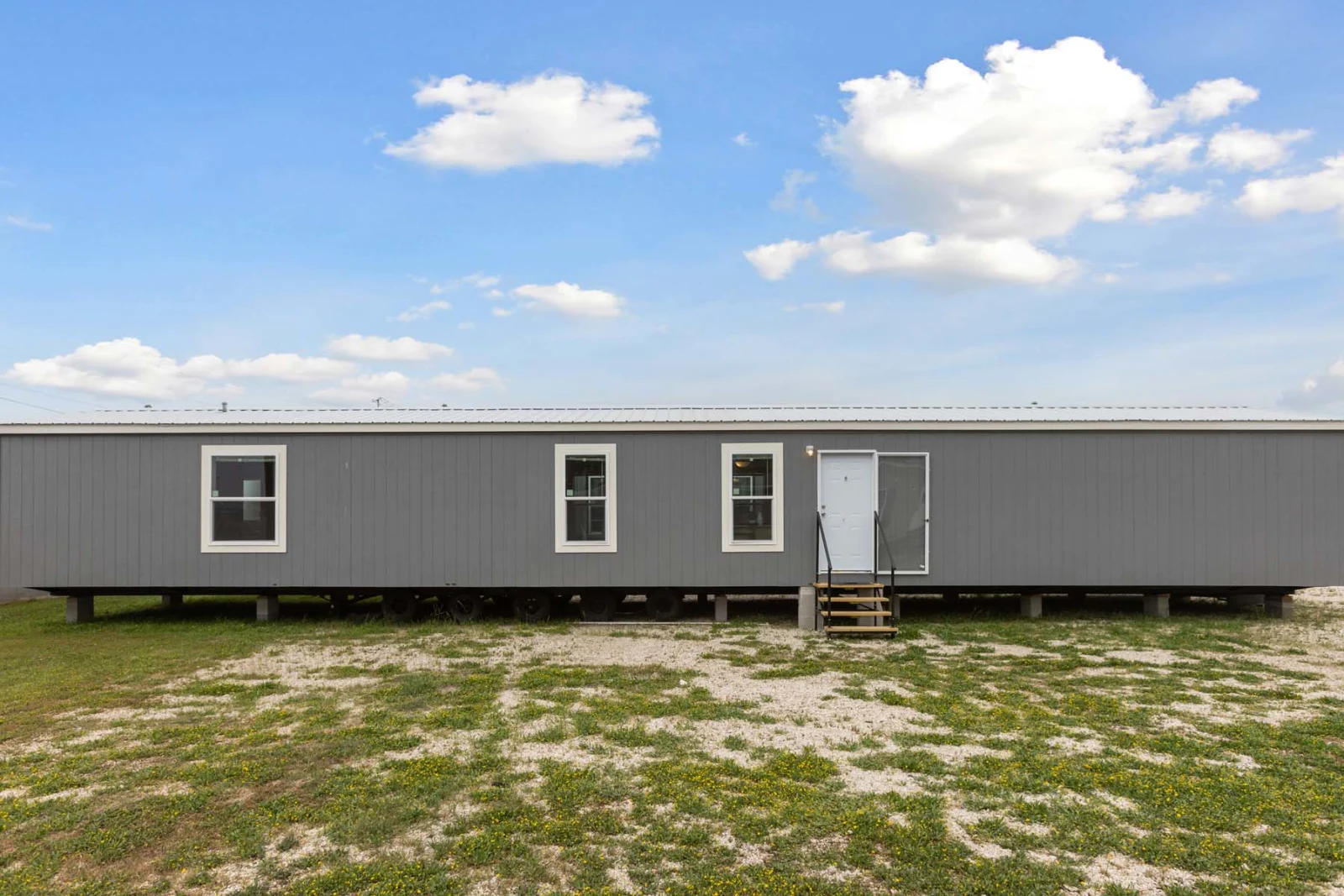
- Heat-rated insulation. R-30 walls minimum, R-49 ceiling. Standard Texas-built units may need upgrade for Phoenix-area summers.
- Dual-stage HVAC. Single-stage AC struggles above 110-degree ambient. Dual-stage or heat-pump-with-gas-backup recommended.
- Sun-rated roof. Cool-roof shingles or metal roof with high reflectance index extends roof life by years.
- UV-rated exterior trim. Standard trim degrades in 5-7 years; UV-rated trim doubles that.
- Water storage. Off-grid placements often require 1,000-2,500 gallon tank for hauled water. Budget the tank, plumbing, and trucking schedule.
Cost benchmarks by AZ region
| County | Land / acre | Permit cost | Insurance / yr | Best for |
|---|---|---|---|---|
| Cochise | $1.5K-$8K | $200-$700 | $700-$1,200 | Off-grid, lowest cost |
| Yavapai | $8K-$40K | $600-$2,000 | $800-$1,400 | Cooler climate, communities |
| Mohave | $3K-$15K | $300-$1,000 | $700-$1,300 | Lake access, snowbirds |
| Apache/Navajo | $4K-$18K | $200-$800 | $650-$1,200 | Solitude, forest |
| Maricopa (Phoenix) | $25K-$200K | $2K-$6K | $900-$1,800 | Urban access, ADU |
Off-grid Arizona: the real workflow
Roughly 60% of our Arizona deliveries go to off-grid or partial-off-grid placements. The realistic setup:
- Solar: 4-8 kW PV array with 20-40 kWh battery, $18K-$35K installed.
- Water: 1,500-2,500 gallon storage with monthly truck delivery, $80-$200/month.
- Septic or composting: Septic $5K-$12K; composting toilet $1.5K-$3K.
- Internet: Starlink at $120/month is the standard now in rural AZ.
- Propane: 250-500 gallon tank for cooking, water heat, and HVAC backup.
Total off-grid setup beyond the unit itself typically runs $25K-$55K. Budget for it from the start.
Information gain: the water question that makes or breaks AZ placements
Arizona’s long-term water scarcity is the single biggest risk to tiny-home buyers in the state. Buyers who put a unit on land without confirming long-term water access have, in some cases, ended up trucking water at $80-$300/month indefinitely — sometimes hundreds of miles round-trip from the nearest source.
Three protective steps before any AZ purchase:
- Pull the parcel’s water rights status from the Arizona Department of Water Resources website.
- Verify well-drilling permits are still being issued in your county (some have been suspended in active management areas).
- Get three quotes from local water-haulers for monthly delivery to your specific zip.
If well water isn’t feasible and trucked water costs more than $200/month, factor that into your 10-year cost-of-ownership total. It’s often $24,000-$36,000 over a decade — meaningful money.
Should you buy in Arizona?
Yes, if you go in with eyes open on heat, water, and remoteness. Cochise County in particular offers some of the lowest-cost tiny-home placement in the United States and the most permissive zoning. Higher-elevation counties (Yavapai, Apache, Navajo) trade away the heat for better total-year livability at moderately higher land cost.
Get an Arizona-spec quote (heat-rated insulation, dual HVAC, off-grid optional) at /contact-tiny-homes/ or browse desert-spec inventory.
See also: tiny homes in California — the western neighbor with strict ADU rules and stronger appreciation but higher overall cost.