Quick answer
A tiny home camper is typically a 100–300 sq ft tiny home on wheels (THOW) built for repeated towing and overnight-to-seasonal use. A park model RV is a 399–765 sq ft ANSI A119.5-certified dwelling transported once and set on piers for long-term residential use. Tiny home campers cost $35,000–$80,000 entry; park models start at $42,899. Pick a camper for true road-life mobility; pick a park model for set-and-stay living with more space per dollar.
The real difference between a tiny home camper and a park model
The two terms are often used interchangeably, but they describe genuinely different products. A "tiny home camper" in 2026 marketing usually means a smaller, road-trip-oriented tiny home with overnight or seasonal use in mind — it’s a hybrid between a camper-trailer and a tiny house. A park model RV is a much larger, residential-grade dwelling that’s technically RV-classified but built and used like a small house. The federal certifications, build standards, and use cases are different.
Side-by-side: tiny home camper vs park model RV (2026)
| Attribute | Tiny home camper (typical THOW) | Park model RV (ANSI A119.5) |
|---|---|---|
| Typical size | 100–300 sq ft | 399–765 sq ft |
| Certification | RVIA | ANSI A119.5 |
| Entry price (delivered) | $35,000–$80,000 | From $42,899 (our Hayden) |
| Towable by | 3/4-ton or larger pickup (civilian) | Professional transport with oversize permits only |
| Mobility | Designed for repeated towing | Single-haul delivery; set on piers |
| Insulation typical | R-14 to R-21 (weight-limited) | R-30 walls, R-49 ceilings standard |
| HVAC typical | Mini-split or roof AC + space heater | Full heat-pump HVAC system |
| Water/septic | RV-style hookups; on-board tanks possible | Standard residential plumbing connections |
| Year-round livability | Marginal in cold climates without upgrades | Yes, in all 48 contiguous states |
Use case: which one wins for your situation?
You want a weekend cabin you’ll tow to lake/mountain placements
Tiny home camper (THOW) wins. Park models can’t be civilian-towed. If you want to move the unit between two or three placements over the year, a THOW is the only real option.
You want to live full-time in a small home on land you own
Park model RV wins. 400–600 sq ft is the real-world floor for two-adult full-time living. Tiny home campers in the 150–200 sq ft range work for solo full-timers but get tight for couples within a few months.
You want a backyard accessory dwelling for in-laws or rental income
Park model RV wins on most lots, HUD manufactured wins on the rest. Most jurisdictions allowing accessory dwellings require permanent installation and minimum-square-footage variances that THOWs can’t satisfy.
You travel for work and want a "home" you can move with you (1–2 year cycles)
Tiny home camper wins. RV park placements are easier with a true RV-format unit. Park models require oversize-load permits every time you move them — expensive and slow.
Cost reality check: per-square-foot pricing
If you pencil out the cost per square foot of usable interior space, park models almost always win the affordability category:
- Tiny home camper (typical 200 sq ft THOW at $75,000): ~$375 per sq ft
- Our Hayden park model (399 sq ft at $42,899): ~$108 per sq ft
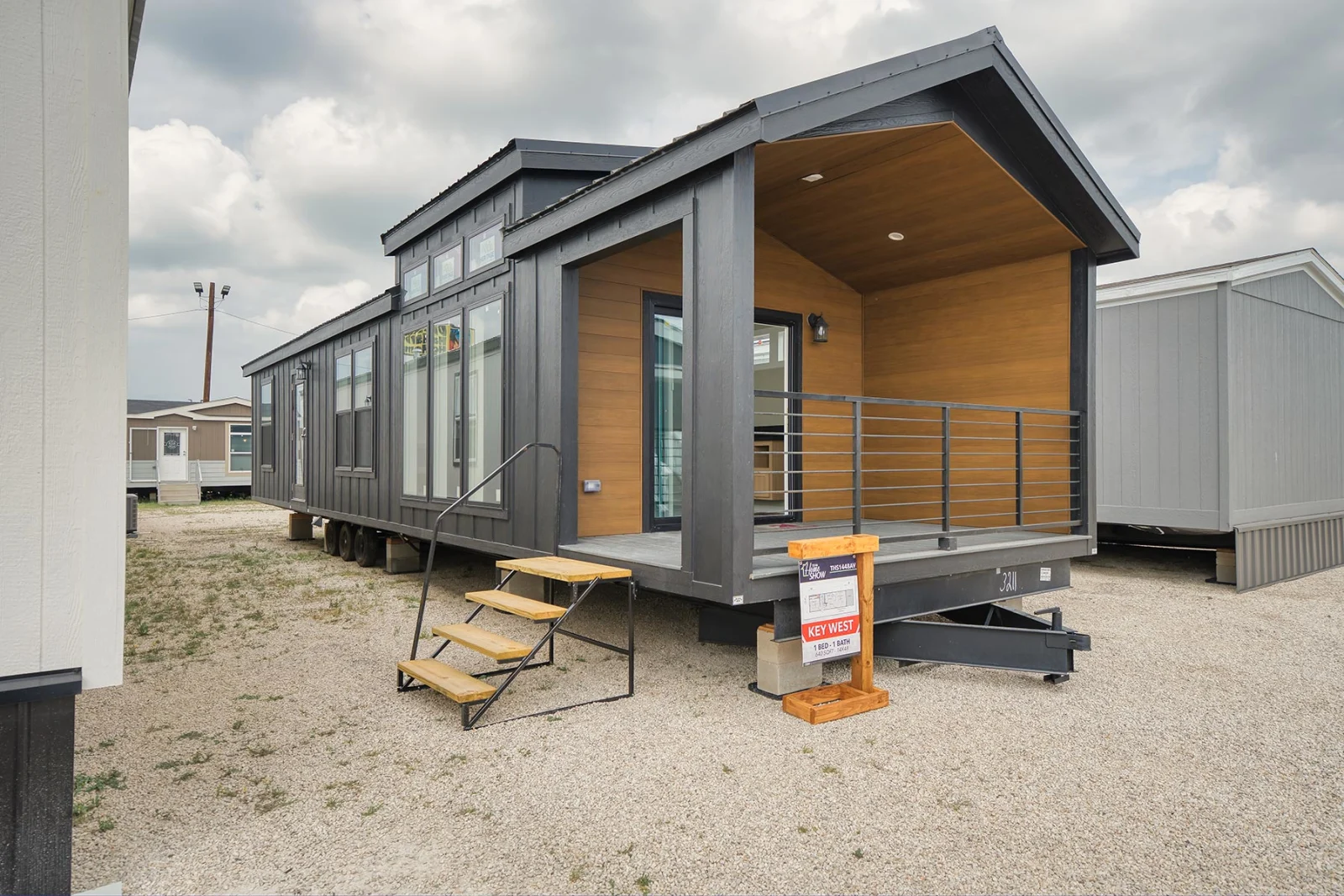
- Our Key West park model (640 sq ft at $54,899): ~$86 per sq ft
The price premium for THOW mobility is real and substantial. If you’re not actually using that mobility within the first 24 months, you’re paying 3–4× per square foot for a feature you don’t need.
Where Tiny Homes USA fits
We build park models, not tiny home campers (THOWs). If you genuinely need a road-legal tow-it-yourself unit, look at Tumbleweed, Mint, or ESCAPE Traveler — they’re the established THOW builders. If you want set-and-stay tiny home living with more livable space per dollar, our park-model lineup is exactly that. Browse our 13 park-model floor plans → or read our full tiny home trailer buyer’s guide →.