Quick answer
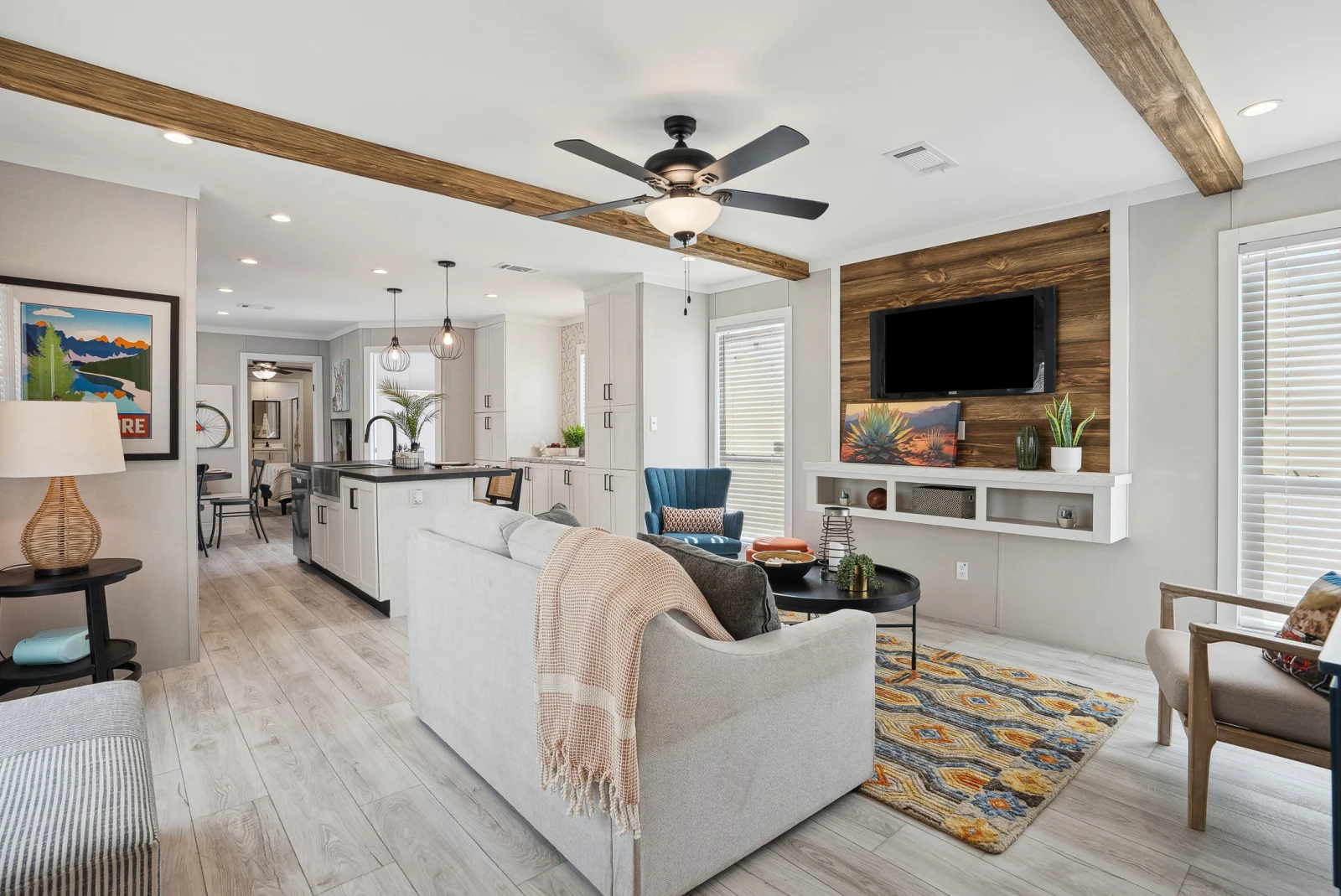
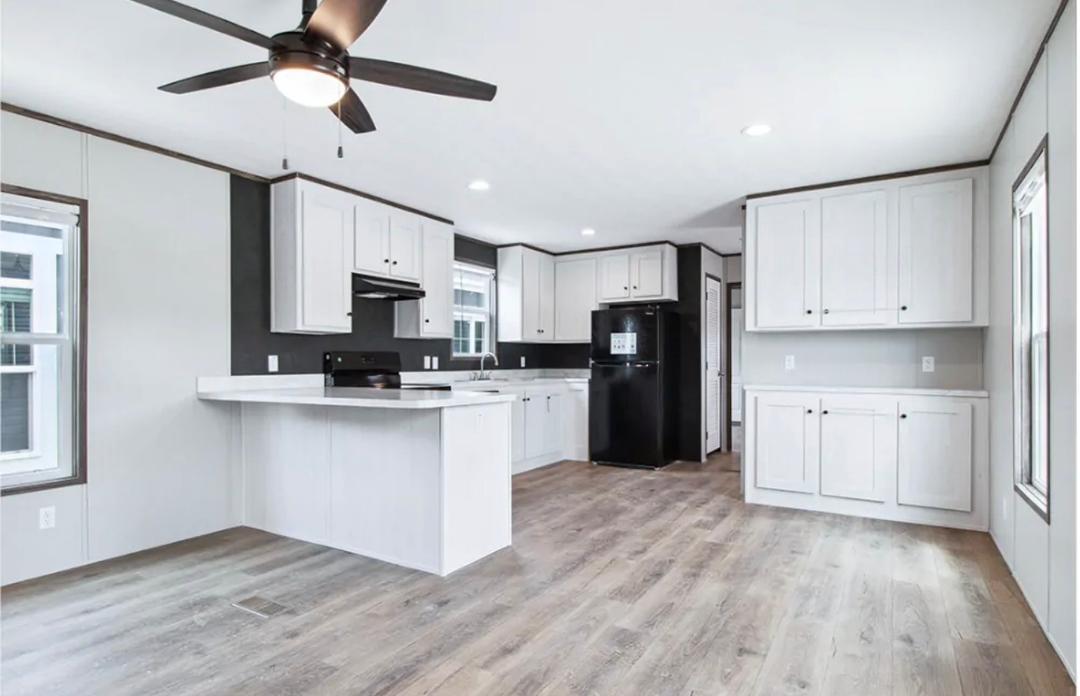
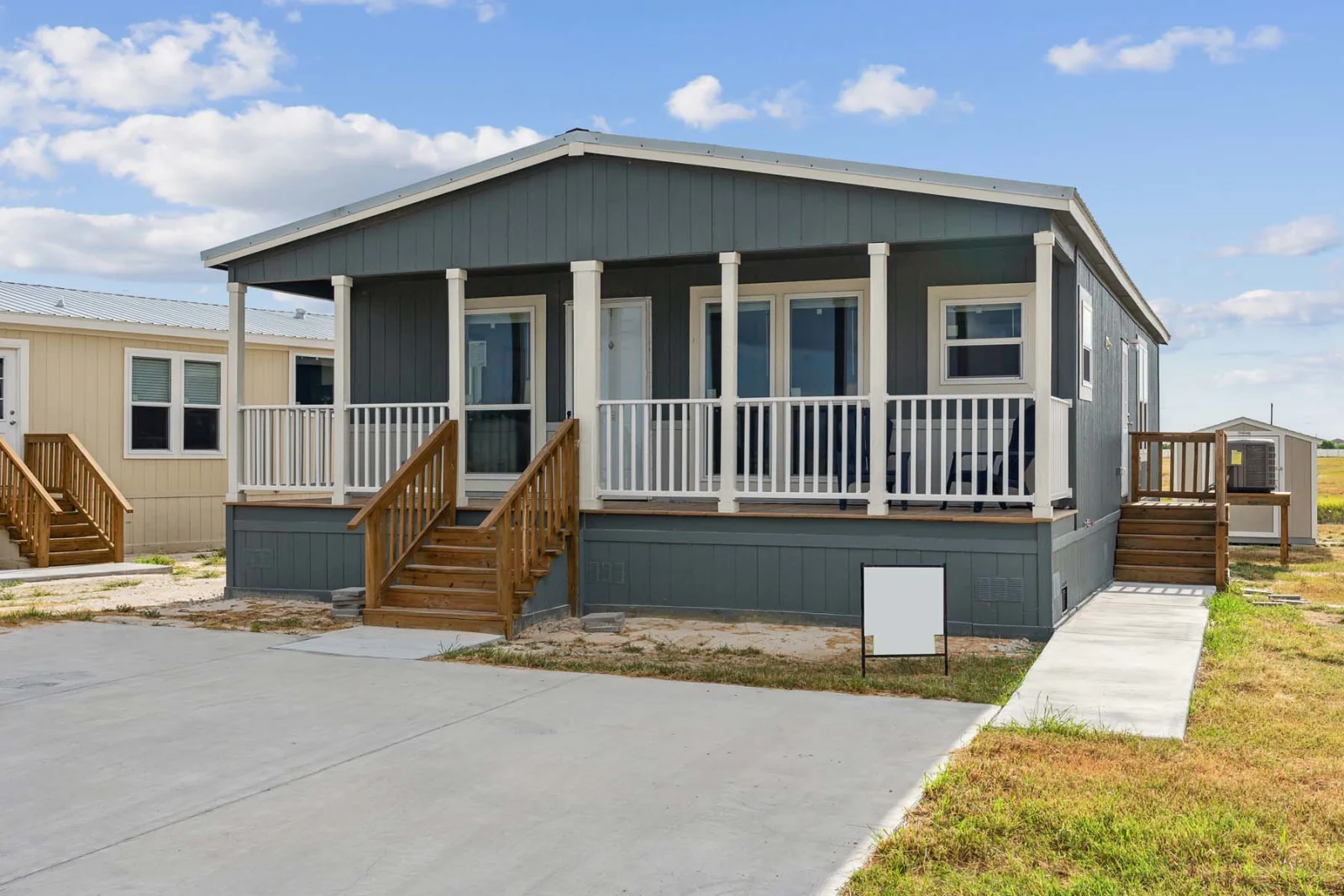
A single wide trailer is a colloquial term for a single-section HUD-certified manufactured home — built as one transported section, typically 14′ wide and 60–82′ long, containing 600–1,200 square feet of living space. The word “trailer” is a legacy term from the pre-1976 mobile home era, but is still used in everyday speech for modern HUD-code single wides. 2026 single wide trailers from Tiny Homes USA start at $55,899 for The Alamo 1423 (660 sq ft, 1BR) and extend up to $80,899 for The Daniels (1,156 sq ft, 2BR). All HUD-3280 certified, real-property eligible on owned land, mortgage-financeable, and tornado-rated for Tornado Alley placements.
"Single wide trailer" — what the term means in 2026
Three terms get used interchangeably; here’s the actual breakdown:
- "Single wide trailer" (colloquial): the everyday term, especially in the South. Same product as below.
- "Single wide mobile home" (colloquial): also same product. “Mobile home” is the legacy name for what’s now called manufactured home.
- "Single wide manufactured home" (legal/federal): the official 2026 term. All single wides built after June 1976 are HUD-3280 certified manufactured homes by federal law.
If you’re searching real estate listings, mortgage docs, or county zoning rules, expect to see “manufactured home” on the official paperwork and “single wide” or “trailer” in casual descriptions of the same property. Modern code-compliant single wides have nothing in common with the pre-1976 trailers some buyers remember.
Standard single wide trailer sizes and floor plans
| Size | Bedrooms | Typical layout | 2026 price (factory-direct) |
|---|---|---|---|
| 600–700 sq ft | 1BR/1BA | Single-corridor, kitchen-living open | $55,899–$65,000 |
| 800–900 sq ft | 2BR/1BA or 2BR/2BA | Split-bedroom (primary one end, secondary other) | $67,000–$78,000 |
| 1,000–1,100 sq ft | 3BR/2BA | Center hall, 3 bedrooms branch off, 2 baths | $75,000–$82,000 |
| 1,140–1,200 sq ft | 3BR/2BA or 2BR/2BA | Premium primary suite + 2 secondary bedrooms | $78,000–$82,000 |
Tiny Homes USA ships eight single wide models in this size range. Our 660 sq ft Alamo 1423 is the entry; our 1,156 sq ft Daniels is the premium 2BR; our 1,140–1,153 sq ft 3BR cluster (Pip, Canal, Frenchman, Puebla, Jazz, San Juan, McAlister) is our most popular family-home segment.
Placement, financing, and resale realities
Placement: single wide trailers can be placed in two configurations:
- On owned land with permanent foundation: the home is real property after title conversion, mortgage-eligible, and appraises within 5–10% of equivalent site-built homes in growing markets.
- In a manufactured-housing community (mobile home park): you own the home, rent the land lot. Lower upfront cost. Personal-property classification with chattel financing. Lot rent runs $350–$850/mo in most US markets.
Financing: FHA Title I and Title II, VA, USDA, and conventional 30-year mortgages all available for single wides on owned land with permanent foundations. Chattel mortgages (home-as-collateral) available for park-placement scenarios. Tiny Homes USA financing partners typically pre-approve in under 24 hours.
Resale: well-maintained HUD-code single wides hold 70–85% of value over 10 years on owned land. Park-placement units depreciate faster because resale comparables are scarce. Foundation-set single wides on rural land routinely appreciate alongside the land at 2–4% per year.
How to buy a single wide trailer in 2026
- Confirm placement viability. Owned land? Check county zoning for HUD-code home permission. Land + foundation typical cost: $25,000–$60,000. Renting a lot in a park? Verify lot dimensions and rules before ordering.
- Pick your floor plan. Tiny Homes USA ships 8 single wide models from 660 to 1,178 sq ft. Browse photos and specs; pick the layout that fits your family.
- Get pre-qualified for financing. Soft-pull credit check, no impact on score. Pre-approval within 24 hours. Down payment from 5%.
- Place a 5% deposit. Refundable for 14 days no-questions-asked, then refundable until you sign the final purchase agreement. Locks your build slot.
- Customize during build window. Finish package upgrades, layout tweaks, off-grid add-ons all configurable during the 6–10 week factory build.
- Foundation install on your lot. Concrete piers or full slab while the home is being built — coordinated separately by a local foundation contractor.
- Delivery and setup. Single wide ships under oversize-load permits, sets on the foundation, gets utility hookups + skirting. Total order-to-move-in: 10–14 weeks.
Related from Tiny Homes USA
Need a quote on a single wide trailer?
Send us your zip code, bedroom requirements, and timeline. We’ll send a delivered-and-installed quote on the right single wide model for your placement, plus financing pre-qualification (soft credit pull, no impact).
Get a Free Quote →