Quick answer
Tiny home customization works through 3 levels: spec-level changes (kitchen island, flooring, appliance upgrades) added to a stock model, floor-plan modifications (move walls, change window placement, add slide-out), and full custom builds (entirely new design). Lead time and cost scale with each level: spec changes add 2-4 weeks and 5-12% to base; full custom adds 8-16 weeks and 25-60%.
The 3 levels of tiny-home customization
Level 1: Spec-level changes (most common)
Take a stock model and customize the finishes, appliances, and minor features. Examples: upgrade flooring to LVP, swap out countertops for granite, change kitchen island design, upgrade to stainless appliance package, add a porch or deck, change exterior color, add extra windows, upgrade insulation R-value.
Cost: 5-12% above base unit price. Lead time: 2-4 weeks added to standard build. Approval: rarely requires engineering.
Level 2: Floor-plan modifications
Modify the underlying layout while keeping the chassis and overall envelope. Examples: move an interior wall to enlarge the bathroom, change a 2-bed to a 1-bed-plus-office, add a slide-out section, change window placement on multiple walls, add a second exterior door.
Cost: 12-25% above base unit price. Lead time: 4-8 weeks added. Approval: structural engineering review usually required for any wall move or slide-out addition.
Level 3: Full custom build
Entirely new design from scratch, often with unique square footage, layout, or exterior styling. Examples: 600 sq ft cottage with a wraparound porch, 1,400 sq ft modular ADU with custom-pitched roof, multi-level loft design.
Cost: 25-60% above comparable stock model. Lead time: 8-16 weeks added. Approval: full engineering, code stamps, and (often) custom permitting workflow required.
The 7-step customization process
- Identify your customization level. Spec-level for finishes only, Level 2 for layout changes, Level 3 for new design. The level determines lead time, cost, and process.
- Talk through requirements with sales. Bring photos, floor-plan sketches, examples from other homes. The clearer your spec, the faster the quote.
- Get a written change-order quote. Itemized: each change line-by-line with cost and lead-time impact. Don’t accept lump-sum.
- Sign and deposit. Standard 25-50% deposit. Custom builds often require larger initial deposit.
- Engineering review (Level 2-3). Structural changes need stamped engineering. 2-4 weeks.
- Production with check-ins. Most builders provide milestone photos at framing, drywall, finish stages.
- Pre-delivery inspection. Walk the unit at the factory if logistically possible. Confirms customizations match spec before shipping.
What costs more vs what doesn’t
| Customization | Typical added cost | Notes |
|---|---|---|
| Flooring upgrade (LVP to engineered hardwood) | +$1,200-$3,500 | High-impact visual change |
| Countertops (laminate to granite) | +$1,800-$4,500 | Adds material and weight |
| Stainless appliance package | +$1,500-$3,500 | Often a tiered builder option |
| Tile shower (vs fiberglass) | +$1,800-$4,800 | Aesthetic + resale upgrade |
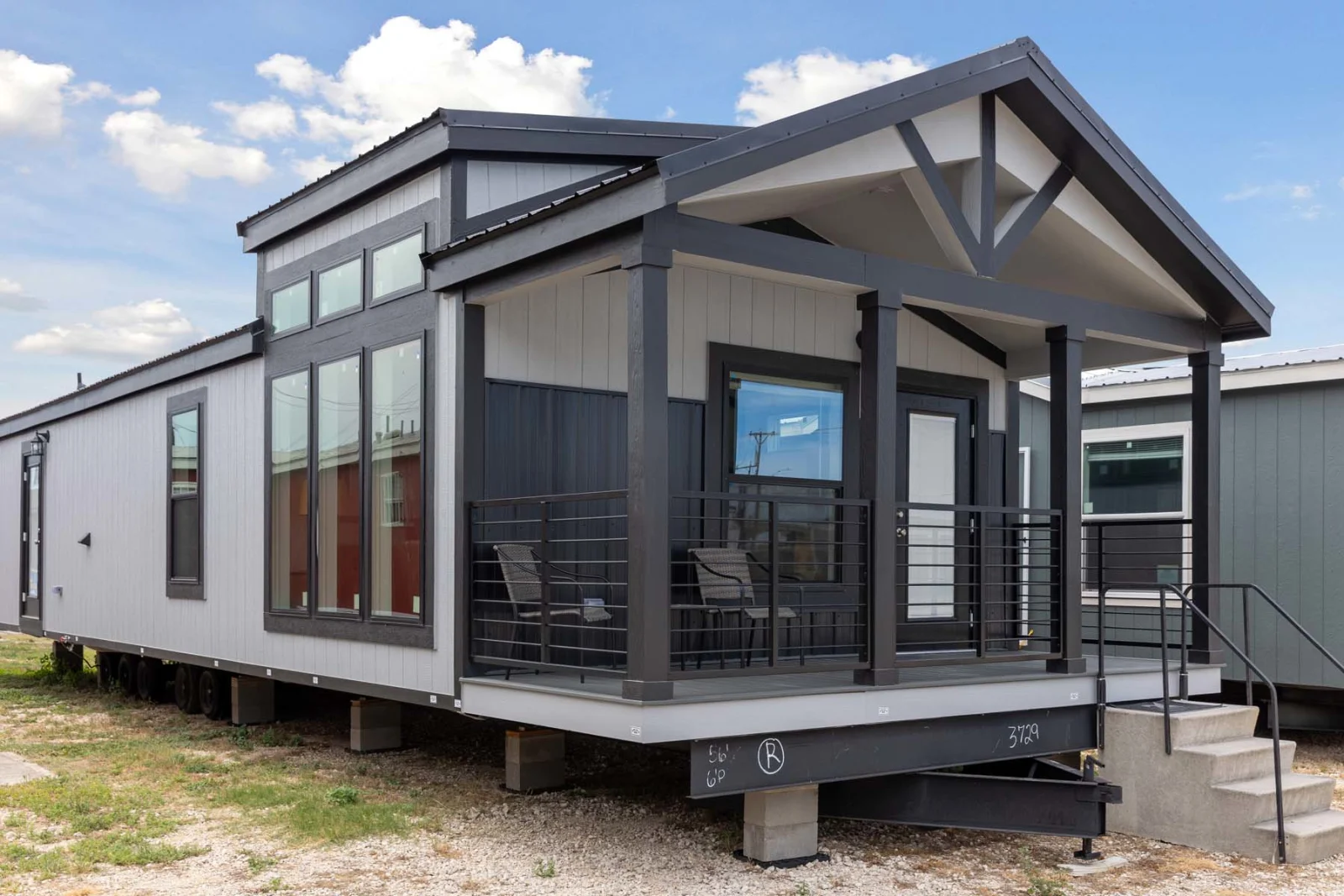
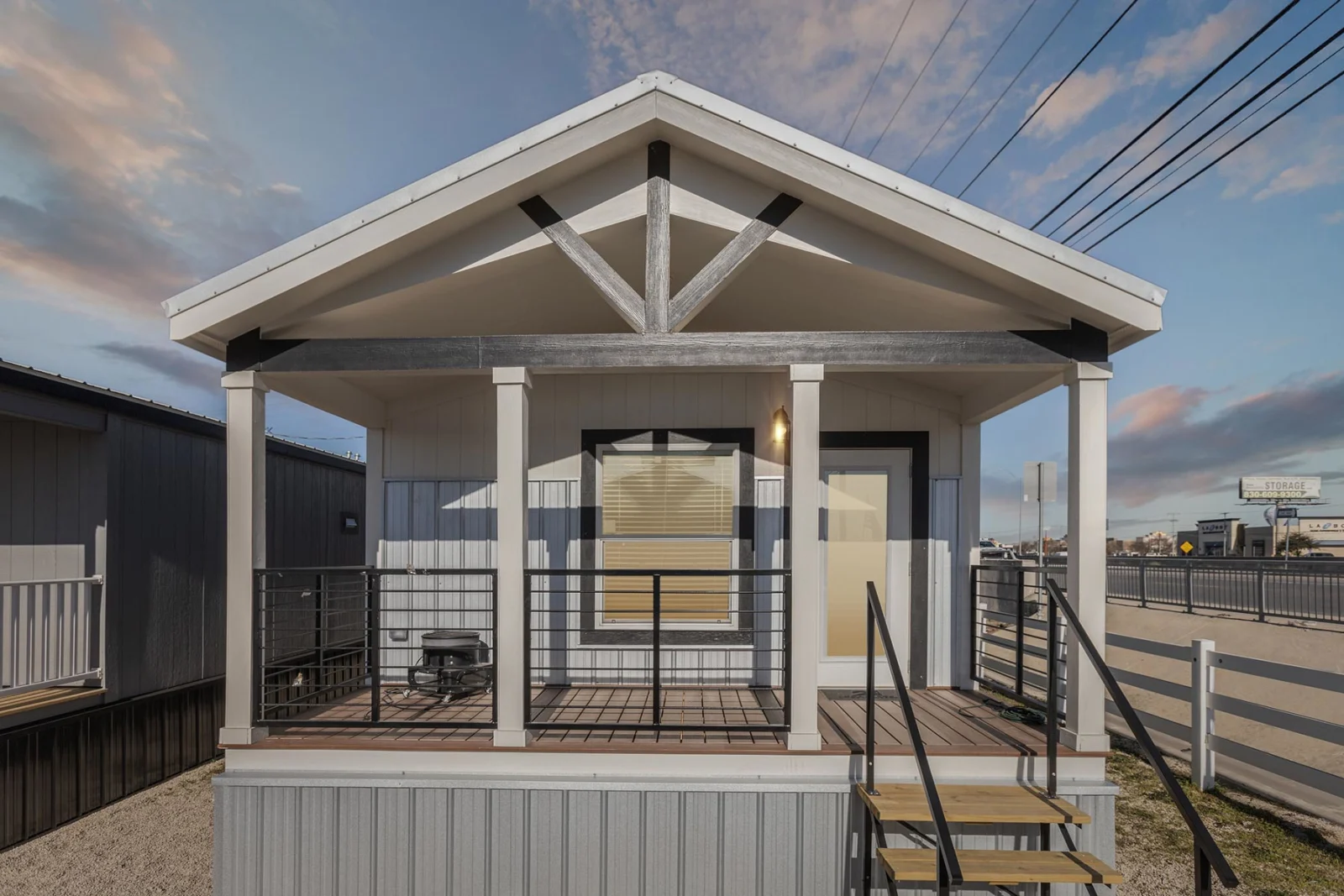
| Porch addition (8x12) | +$3,500-$7,500 | Single highest-ROI external upgrade |
| Extra windows (each) | +$400-$1,200 | Improves light and resale |
| Move interior wall | +$1,500-$5,000 | Requires re-engineering |
| Add slide-out section | +$8,000-$18,000 | Mechanical complexity adds cost |
| Custom roof pitch | +$2,500-$8,000 | Requires full structural re-engineering |
| Insulation upgrade (R-21 to R-30 walls) | +$1,500-$3,500 | Pays back in cold or hot climates |
| Heat pump mini-split (vs resistance) | +$1,800-$4,500 | Highest energy-bill ROI |

The 5 smartest custom upgrades (best ROI)
1. Porch or deck addition
Doubles your functional living space 9 months/year. Adds 8-15% to resale value. The single best customization investment in tiny homes.
2. Heat pump mini-split (vs resistance heat)
Cuts winter heating bills by 40-60%. Pays back the upgrade cost in 2-4 years. Improves comfort dramatically.
3. Insulation upgrade for your climate zone
R-30 walls + R-49 ceiling vs standard R-21/R-30. Pays back in 3-6 years through lower utility bills, plus better comfort year-round.
4. Tile shower (vs fiberglass)
Aesthetics and resale. Buyers consistently pay more for tile-shower units. Typical $2K-$4K upgrade adds $4K-$8K to resale value.
5. Extra windows
Adds light, perceived spaciousness, and resale appeal. $400-$1,200 per window. Typical buyer adds 2-4 extra windows.
Customizations that often disappoint
- Loft conversions. Lofts photograph well but underperform real bedrooms in daily use. Buyers regret these often.
- Murphy bed installations. Complex mechanism, expensive, rarely actually deployed daily. Most buyers stop using them within 6 months.
- Excessive built-ins. Custom built-ins look great in photos but reduce flexibility for future layout changes.
- Decorative trim packages. Add cost but minimal resale benefit and faster aesthetic dating.
Information gain: the “customize at the factory” principle
The single most expensive mistake in customization is doing it after delivery instead of at the factory. Factory customization costs 20-40% less than on-site customization for the same change. Reasons: shop tooling, bulk material discounts, no mobilization fee, and integrated workflow.
Practical implication: identify every customization you’ll want, including upgrades you might want in 2-3 years (porch, deck, insulation, windows). Add them all at the factory if budget allows. The buyers who do this consistently report total cost 15-25% lower than buyers who do staged customization over time.
What to ask the builder
- What customizations are spec-level (no engineering required) vs Level 2-3?
- What’s the lead-time impact for each customization line item?
- Can I see the engineering approval pathway for major changes?
- Is there a customization gallery I can browse for inspiration?
- What’s the change-order policy after deposit (cost, timing, fees)?
For specific customization quotes on any of our floor plans, contact us at /contact-tiny-homes/. For our service-page version of customization including photos and gallery, see our custom build page. For the upgrade-specific deep dive, see our 15 best upgrades article.