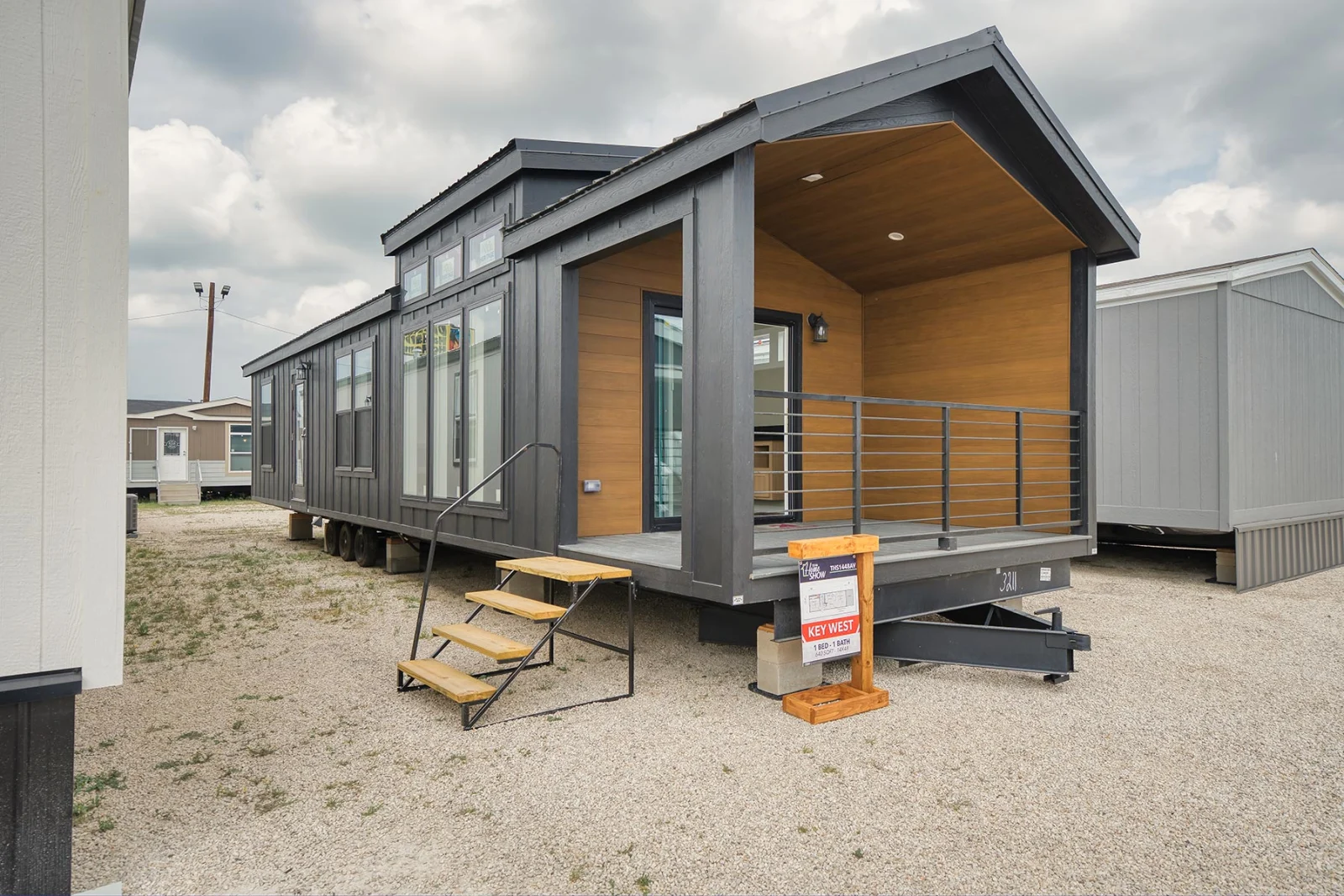
Quick answer
Tiny home insurance in 2026 averages $400-$1,800 per year depending on construction type, location, coverage level, and use case. The four policy paths: RV insurance (park models on wheels), manufactured-home dwelling policies (HUD units), standard homeowner policies (modular on permanent foundation), and specialty tiny-home policies (custom-built units). Most buyers underinsure on actual replacement cost.
Why tiny home insurance is its own product
Standard homeowner policies aren’t designed for tiny homes. Most refuse coverage outright on units under 600 sq ft, on units with vehicle titles, or on RVIA-certified construction. Trying to insure a $55K park model with your local State Farm office often ends with a polite “we don’t write that.”
The good news: the specialty tiny-home and manufactured-home insurance market has matured significantly in 2026. Foremost, Assurant, American Modern, and several others write coverage specifically for our category at competitive rates.
The 4 policy paths
Path 1: RV insurance (park models on wheels)
For RVIA-certified units with vehicle titles. Provides liability, comprehensive, and collision while in transit, plus on-site dwelling-style coverage when stationary. Best providers in 2026: Progressive, Good Sam, National General, Foremost. Average annual premium: $400-$900. Key add-on: full-time rider if you live in the unit year-round (without it, claims for full-time use can be denied).
Path 2: Manufactured-home dwelling policy (HUD-code units)
For HUD-code units on piers, slab, or basement. Covers structure, contents, liability, and additional living expenses. Best providers: Foremost, American Modern, Assurant, Standard Casualty. Average annual premium: $600-$1,400. Often required by chattel lenders as a condition of the loan.
Path 3: Standard homeowner policy (modular on permanent foundation)
Modular units on owned land with a permanent foundation and real-property title qualify for standard HO-3 homeowner policies. Best providers: any major carrier — State Farm, Allstate, Liberty Mutual, USAA. Average annual premium: $700-$1,800. Lowest premium per dollar of coverage of all four paths.
Path 4: Specialty tiny-home policy (custom builds, THOWs)
For custom or builder-built tiny homes that don’t fit the other three categories. Strongholds: Strategic Insurance Agency, INSUREMyRV, Foremost specialty division. Average annual premium: $750-$1,800. Coverage is more flexible but premiums run higher because the underwriter doesn’t have an actuarial table to lean on.
What coverage you actually need
| Coverage | What it does | Recommended limit |
|---|---|---|
| Dwelling | Replacement cost of the structure | 110-125% of unit price |
| Personal property | Contents (furniture, electronics, clothes) | 50-70% of dwelling |
| Liability | If someone is hurt on your property | $300K minimum |
| Loss of use | Hotel/rental costs while home is uninhabitable | 20% of dwelling |
| Other structures | Sheds, decks, fences | 10% of dwelling |
| Wind/hail rider (storm zones) | Specific named-peril coverage | Match dwelling |
| Flood (separate policy) | NFIP or private flood | Match dwelling if in flood zone |
The 5 claims that get denied (and how to avoid them)
1. Full-time occupancy without the rider
Standard RV policies assume recreational use. Living in the unit full-time without the full-time rider voids most water-damage and theft claims. Add the rider; it usually costs $80-$180/year and protects everything else.
2. Improper foundation or anchoring
Manufactured-home policies often require evidence of HUD-code installation (anchors, tie-downs, skirting) before paying wind claims. Get the installation certificate from the dealer and file it with the carrier.
3. DIY modifications without disclosure
Adding a deck, a slide-out, or rewiring electrical without notifying the carrier can void the policy. Call before you modify.
4. Coverage at sticker price (not replacement cost)
Insuring a $55K unit at $55K coverage means a total loss claim won’t cover demolition, debris removal, or current-market replacement. Insure at 110-125% of purchase price for actual replacement.
5. Lapsed pay during construction or transit
Many policies have a transit exclusion or a vacancy clause. Confirm coverage during the build-and-deliver window with both the builder’s carrier and your own.
Information gain: the bundle math nobody calculates
Bundling tiny-home insurance with auto and umbrella often saves 12-18% on the tiny-home premium and 8-15% on the auto premium. On a $1,200 tiny-home policy plus $1,800 auto, bundling typically saves $360-$540/year.
The carriers most likely to bundle tiny-home/manufactured policies with auto: Foremost (Farmers), American Modern, Liberty Mutual, USAA (military), and Erie (Mid-Atlantic states). Get a bundled quote from at least two of these before you accept your first standalone quote — the spread is usually significant.
How premiums vary by location
Three location-based premium drivers, ranked by impact:
- Wind zone. Coastal Florida, Gulf Coast, Tornado Alley premiums run 50-180% above national average.
- Wildfire zone. California foothills, Pacific Northwest, Colorado Front Range can add 25-100% to premiums or trigger non-renewal.
- Crime score. Urban placements typically run 10-30% above rural.
Texas placements (where most of our deliveries land) average $700-$1,300/year for HUD-code units — roughly mid-pack nationally.
Get matched to the right insurer
Send your unit type, zip code, and intended use (full-time, seasonal, rental) to /contact-tiny-homes/ and we’ll suggest 2-3 carriers known to write your specific configuration competitively. Insurance setup is one step; financing and site prep typically run in parallel during the 30-60 days before delivery.