Quick answer
A tiny home kitchen works when you keep 7 multi-function tools (Instant Pot, sheet pan, cast iron, immersion blender, food processor, knife set, and quality cutting board), 2-3 specialty items maximum, and adopt a weekly meal prep routine that batches 4-7 meals on Sunday. The right setup feels efficient and creative; the wrong setup feels cramped and frustrating.
The big kitchen mindset that doesn’t work
The single most common kitchen mistake first-time tiny-home buyers make: trying to import their big-kitchen approach. Wide pantry of one-purpose appliances. Six different pans for different recipes. A drawer full of single-use gadgets. None of this fits and none of it’s necessary.
The buyers who love their tiny-home kitchen at month 12 have shifted their cooking style: fewer tools, more multi-function gear, more meal prep, less daily complexity. The food still comes out great. The kitchen stays usable.
The 7 multi-function tools to keep
- Instant Pot or multi-cooker. Replaces slow cooker, pressure cooker, rice cooker, yogurt maker. $80-$160.
- One quality 12-inch cast iron skillet. Stovetop, oven, broiler. Replaces 3 pans. $30-$80.
- One quality 12x18 sheet pan. Roasted vegetables, sheet-pan dinners, baking. $20-$40.
- Immersion blender. Soups, smoothies, sauces. Replaces blender + small food processor. $35-$80.
- Compact food processor. Slicing, dicing, kneading. The one you’ll actually use because it’s easy to clean. $50-$120.
- Quality 8-inch chef’s knife + paring knife + bread knife. Three knives cover 95% of cooking. $80-$200 total.
- Two cutting boards (small + medium, plastic + wood). Plastic for raw meat, wood for everything else. $30-$60.
The 2-3 specialty items worth keeping
Pick a maximum of three from this list, based on what you actually cook:
- Stand mixer — if you bake bread or large-batch desserts weekly.
- Espresso machine — if you currently spend $50+/month on coffee out.
- Air fryer — if you cook frozen foods or want crispy results without oil.
- Sous vide stick — if you cook proteins regularly and want consistent results.
- Outdoor grill — on the porch, freeing kitchen space.
- Wok — if you cook Asian food weekly.
- Pasta machine — if you actually make fresh pasta (most people don’t).
The discipline: pick your real top 3 based on actual usage history, not aspirational cooking. Donate or sell the others.
What to leave behind
| Don't keep | Why | What to use instead |
|---|---|---|
| Bread maker | Single use, large footprint | Stand mixer + sheet pan |
| Rice cooker | Instant Pot does this | Instant Pot rice setting |
| Slow cooker | Instant Pot does this too | Instant Pot slow-cook setting |
| Single-cup coffee maker | Pod waste; capsule cost | French press or AeroPress |
| Toaster + toaster oven | Redundant | One toaster oven only |
| 3+ frying pans | Cast iron does most of this | 1 cast iron + 1 nonstick |
| Decorative serving dishes | Used 2x/year | Repurpose existing plates |
| Specialty baking pans | Used rarely | Sheet pan + 1 round + 1 loaf |
The weekly meal prep routine
Tiny-home kitchens shine on Sunday meal prep, not 7-night-a-week from-scratch cooking. The pattern that works:
- Sunday 90-minute prep block. Roast 2 sheet pans of vegetables, cook 1 large protein (whole chicken, pork shoulder, batch of beans), prep 2 grain bases (rice, quinoa, or pasta).
- Mix-and-match weekday meals. Vegetables + protein + grain assembled fresh each evening. 10-15 minutes per meal, no major cleanup.
- 2 from-scratch evenings per week. Save the longer cook for nights when you actually have time and want to enjoy the process.
- 1 leftovers / fridge-clean-out night. Reduces waste and weekly grocery cost.
- 1 takeout or restaurant night. Gives the kitchen and the cook a break.
Pantry management in 30 sq ft of cabinet
- Buy weekly, not monthly. Less storage capacity means smaller and more frequent grocery trips.
- Decant into uniform jars. Square containers waste no space; 6-12 mason jars handle most pantry staples.
- One spice rack, refilled. Buy spices in bulk pouches and refill the same 12-16 small jars instead of accumulating dozens.
- FIFO rotation. First in, first out. New groceries go behind older ones. Prevents expiration waste.
Information gain: the cleanup pattern that saves the kitchen
The single biggest difference between tiny-home kitchens that work and ones that frustrate: cleaning as you cook. In a big kitchen you can leave dirty dishes on a counter; the counter has space to absorb them. In a tiny-home kitchen, two dirty pans on a 24-inch counter blocks all subsequent cooking.
The discipline: wash the prep bowl while the onions saute. Wash the chef knife while the pasta boils. Wash the cutting board between protein and vegetable. By the time the meal is plated, the kitchen is mostly clean. Buyers who adopt this pattern report kitchen satisfaction 2-3x higher than those who batch cleanup at the end. Same dishes, dramatically different experience.
Worth investing in
- Quality knives (3 of them).
- Cast iron + sheet pan + Instant Pot.
- Sharp scissors (more useful than you expect).
- Microfiber towels (replace paper towels for most tasks).
- One quality dish soap (Dawn works) and one quality scrub brush.
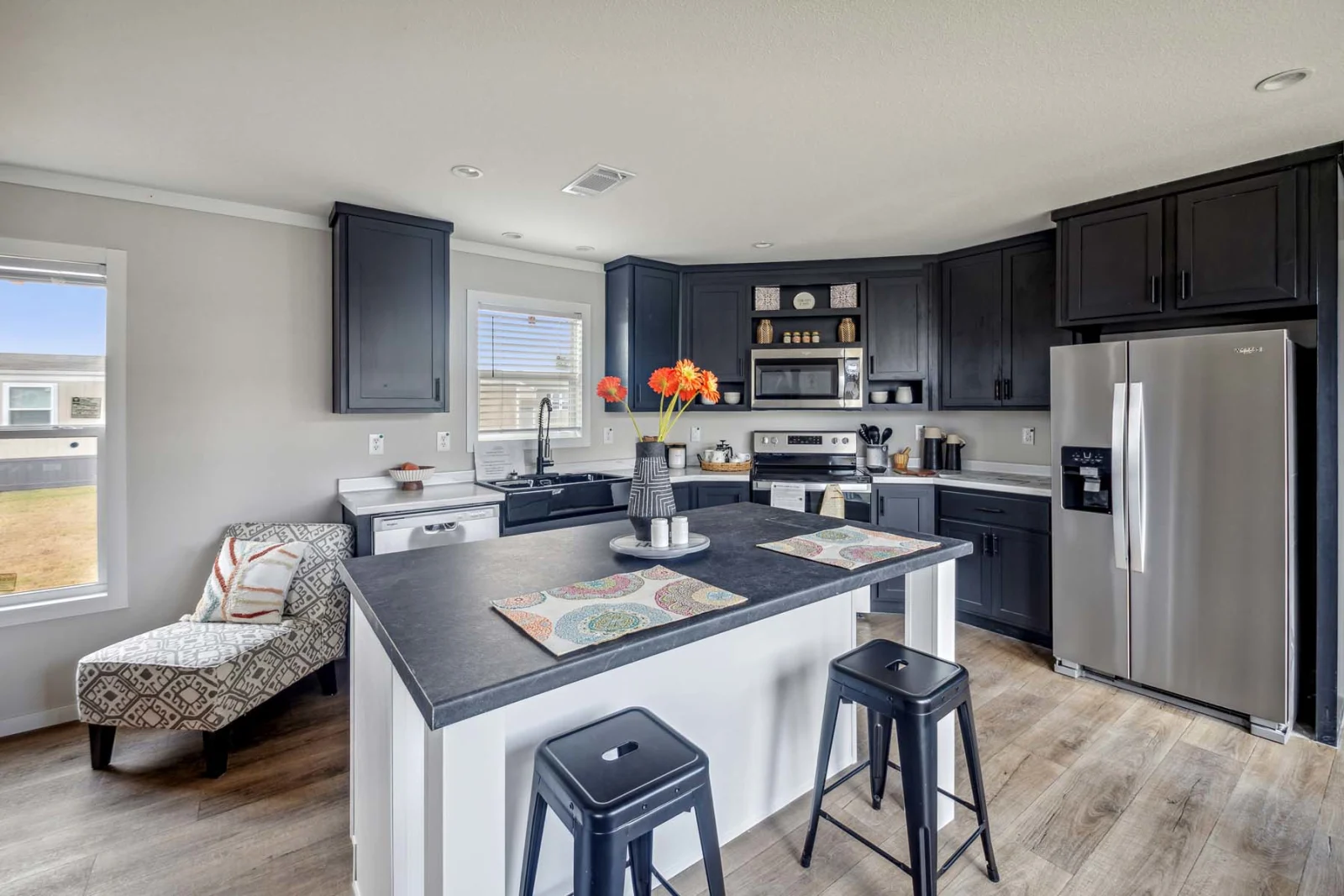
For floor plans with the best tiny-home kitchens, the Homestead has an island layout that works exceptionally well, and the Birch’s great-room kitchen handles family cooking. See our floor plans guide for layouts. For storage upgrades that maximize a small kitchen, our 30 storage ideas article covers 8 kitchen-specific upgrades.