Quick answer
An accessory dwelling unit (ADU) is a secondary dwelling on a single-family lot. As of 2026, California, Oregon, Washington, Colorado, Vermont, and Maine have state-mandated ADU rights that override most local restrictions. Tiny homes (HUD-code or modular, on permanent foundation, 400-1,200 sq ft) qualify as ADUs in nearly all of these jurisdictions plus growing numbers of cities elsewhere. ADU rental income typically $1,200-$3,400/month in metro areas.
What an ADU is, legally
An ADU is a smaller, secondary dwelling that shares a lot with a primary single-family home. ADUs go by many names: granny flat, in-law suite, casita, secondary unit, garden cottage, backyard home. The legal definition varies by jurisdiction but generally requires:
- Located on a parcel zoned for single-family residential.
- Smaller than the primary dwelling (typically 400-1,200 sq ft maximum).
- Has its own entrance, kitchen, bathroom, and sleeping area.
- Connected to utilities (water, sewer, electric).
- Permitted as a dwelling, not just a structure.
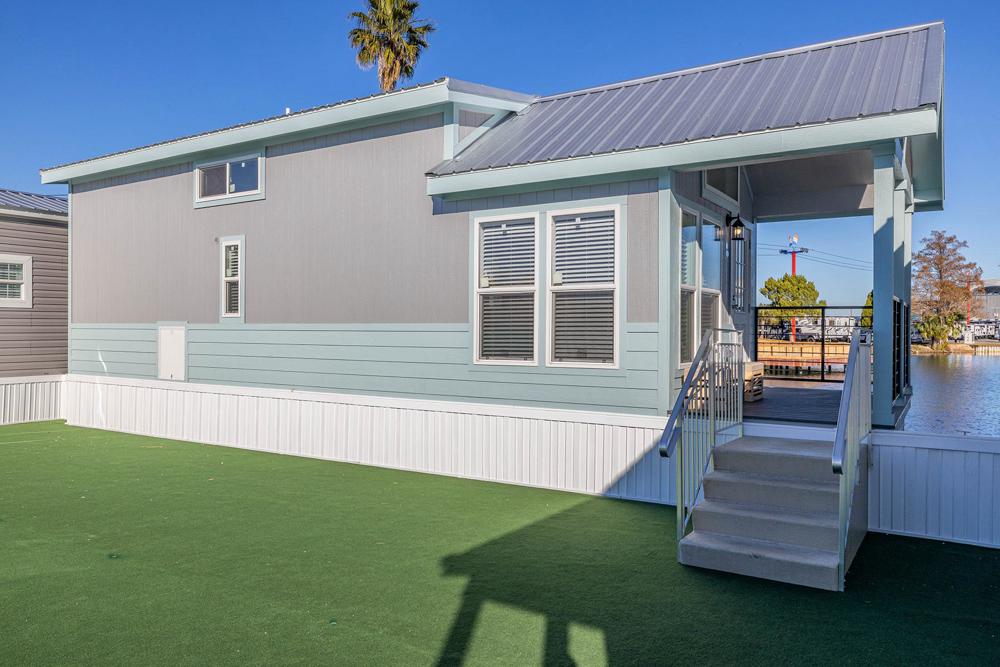
A tiny home placed as an ADU is a permanent dwelling for legal purposes — eligible for rental income, family occupancy, or aging-in-place use depending on jurisdiction.
The 6 states with strongest ADU rights in 2026
| State | Statute | Effective | What it does |
|---|---|---|---|
| California | SB-9, AB-2533, AB-1033 | 2022-2025 | Mandatory ADU approval, lot splits, condo conversion |
| Oregon | HB-2001 | 2019 | ADUs in cities of 25,000+, 60-day decision |
| Washington | HB-1337 | 2024 | Detached ADUs in nearly all SFR zones |
| Colorado | HB-1024 | 2024 | ADUs allowed in most R-1 zones statewide |
| Vermont | S-100, S-226 | 2023-2024 | ADUs by right in nearly all residential zones |
| Maine | LD-2003 | 2022 | ADUs of 800 sq ft+ in most SFR zones |
These states explicitly preempt most local restrictions. Architectural review still applies; outright bans don’t.
The 5-step ADU process
Step 1 — Verify your lot is ADU-eligible
Confirm the lot is zoned single-family residential, isn’t in an overlay or critical-area zone that prohibits ADUs, and meets minimum lot-size requirements. Most jurisdictions require 4,000-7,500 sq ft minimum lot size.
Step 2 — Check setback and parking rules
State ADU laws typically cap setbacks at 4 feet (sides and rear). Parking requirements vary; some jurisdictions require 1 additional space, others waive parking if near transit. Note these constraints early — they shape where the ADU can sit.
Step 3 — Check utility capacity
Existing electrical service may need upgrade from 100A to 200A to support both dwellings. Sewer/septic capacity must accommodate the additional dwelling. Water meter usually doesn’t need upgrade. Get utility provider letters confirming capacity.
Step 4 — Apply for the ADU permit
Submit site plan, floor plan, manufacturer specs, foundation engineering, and utility connection plan to the local planning department. Fee: $400-$5,000. Timeline: 30-90 days (60-day statutory cap in California).
Step 5 — Site prep, delivery, install, inspect
Prep the foundation, deliver the unit, set on permanent foundation, connect utilities, pass final inspection, receive certificate of occupancy. 4-12 weeks total.
Best tiny home models for ADU use
- Hayden / Cedar Ridge ($42,899, 399 sq ft) — smallest ADU footprint, fits the most lots, lowest cost, typically RVIA which limits some jurisdictions.
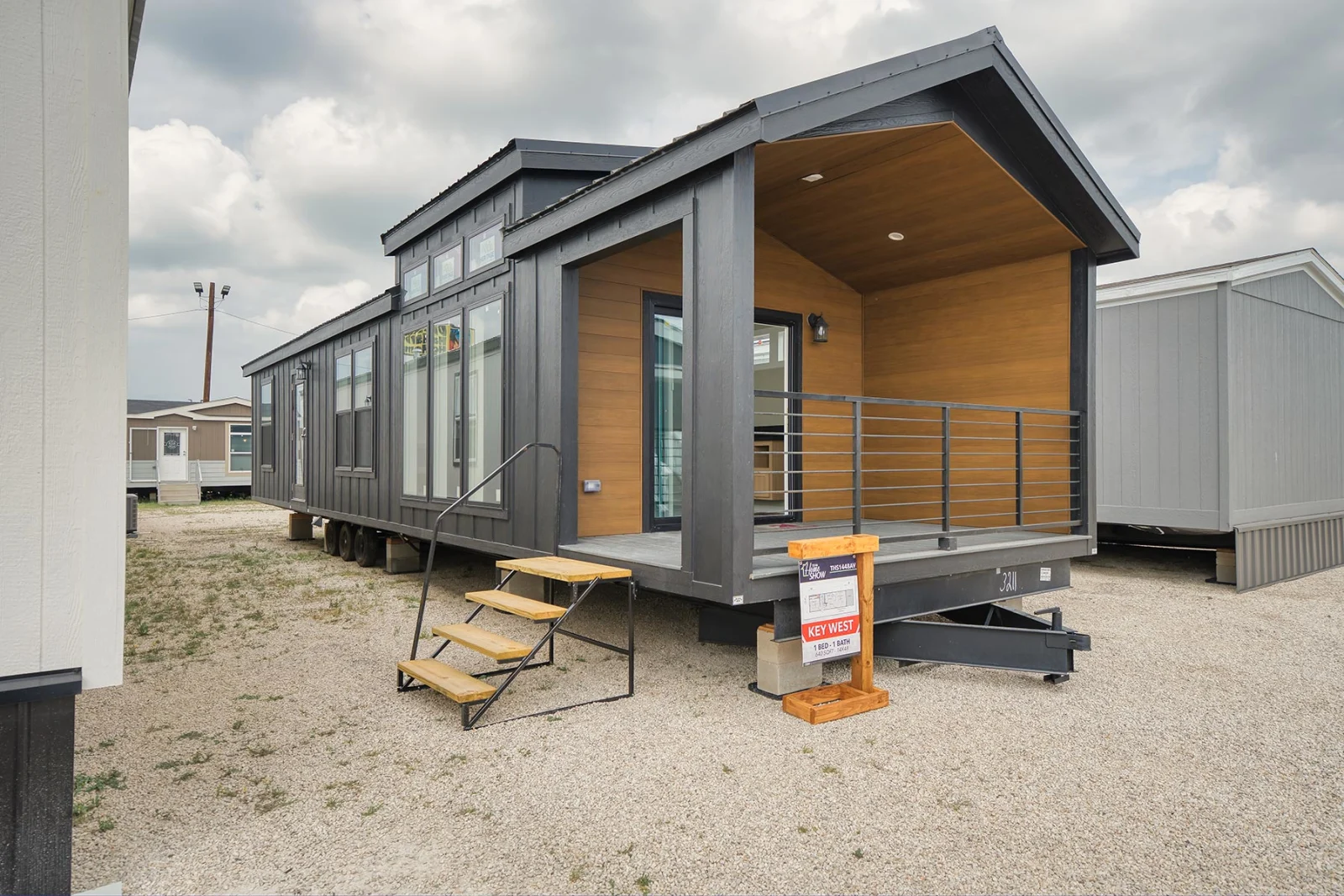
- Key West ($54,899, 640 sq ft) — HUD-code, qualifies in most ADU jurisdictions, real 2-bedroom for higher rental income.
- Homestead ($75,899, 840 sq ft) — HUD-code, larger 2-bedroom, qualifies for ADU rental at premium rates in metro areas.
- Birch ($77,899, 1,153 sq ft) — at the upper ADU size limit in most jurisdictions, 3-bedroom for family ADU use or premium rental.
ADU rental income math (real 2026 numbers)
| Market | Typical ADU rent / month | Annual gross | Net after expenses |
|---|---|---|---|
| Seattle metro | $1,800-$3,400 | $22K-$41K | $16K-$32K |
| Portland metro | $1,400-$2,600 | $17K-$31K | $13K-$25K |
| SF Bay Area | $2,400-$4,200 | $29K-$50K | $22K-$40K |
| LA / OC | $2,000-$3,400 | $24K-$41K | $18K-$33K |
| Denver metro | $1,400-$2,400 | $17K-$29K | $13K-$23K |
| Austin metro | $1,400-$2,400 | $17K-$29K | $13K-$23K |
| Sub-metro / mid-size | $900-$1,600 | $11K-$19K | $8K-$15K |
Information gain: the ADU appraisal premium
An often-missed financial benefit of placing an ADU: the primary residence’s appraised value typically increases more than the cost of the ADU itself. In strong rental markets (Seattle, Portland, LA, Bay Area, Austin), a $95K all-in tiny-home ADU often adds $130K-$210K to the property’s appraised value because the appraisal accounts for rental income potential.
The math: $95K invested, $130K-$210K added to property value at next appraisal, $1,400-$3,400/month ongoing rental income. Few real-estate plays in 2026 produce that combination of equity gain plus cash flow.
Should you place an ADU?
Yes, in three scenarios: (1) you own a single-family lot in a strong rental market, (2) you need housing for aging parents or adult children, or (3) you want to age in place by moving to the smaller unit and renting out the main house. The math works in nearly every metro market in 2026.
Get an ADU-specific quote (foundation, ADU permit budget, utility upgrade if needed) at /contact-tiny-homes/. For zoning verification before buying, see our county zoning guide. For state-by-state details, see our zoning by state article.
See also: the four states with the strongest ADU rights — California, Oregon, Washington, and Colorado — for state-specific ADU rules and rental income math.